

At Barefoot Expeditions, conscious travel is not about slowing down or disconnecting from reality.
It is about understanding where you are, how it came to exist, and how your presence fits into a much longer story.
Few places on Earth tell that story as clearly as the Galápagos Islands.
This is not mythology.
This is not symbolism.
This is science, unfolding over millions of years.
Where the Story Begins: Deep Time and Fire
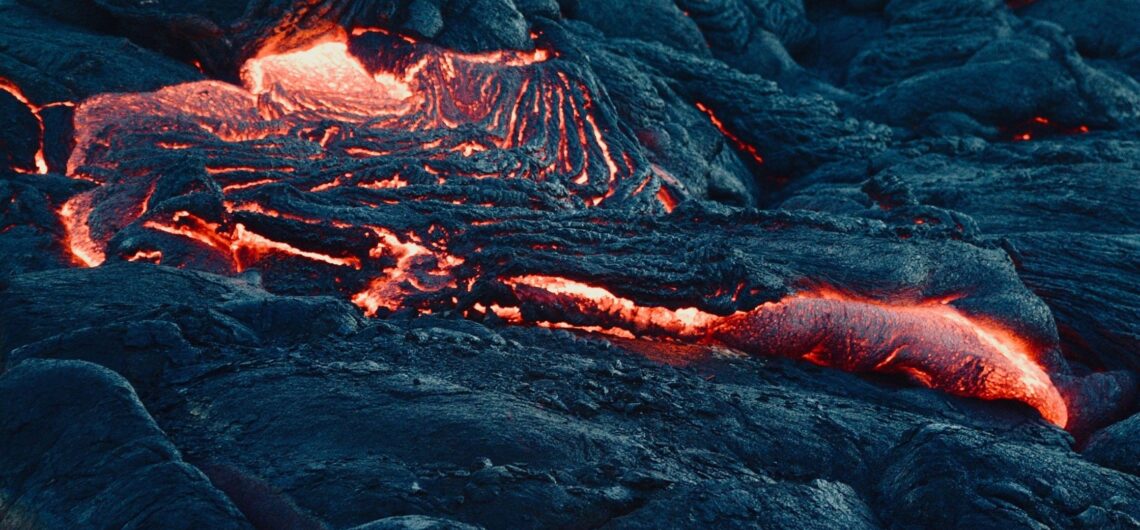
Between 3 and 5 million years ago, the Galápagos Islands rose from the ocean floor through submarine volcanic activity. They are among the youngest island systems on the planet and remain geologically active today.
Here, geology is not abstract. Lava fields, volcanic cones, and erosion patterns are visible evidence of plate tectonics and planetary formation still in motion.
Science matters here because it explains origin.
Isolation as a Natural Experiment
For millions of years, the islands remained isolated. Few species arrived—but those that did adapted. With no competition and highly specific environments, life evolved in precise, measurable ways.
This isolation produced endemic species found nowhere else on Earth. Not by chance, not by design—but through adaptation and environmental pressure.
This is biology responding to conditions.
1535: Human Contact, Minimal Impact
In 1535, Spanish bishop Fray Tomás de Berlanga encountered the islands accidentally while sailing across the Pacific. Human presence remained limited for centuries, leaving ecosystems largely intact.
From a scientific perspective, this period provides something rare: near-baseline ecological conditions before sustained human impact.
1835: Evolution Observed, Not Believed
When Charles Darwin arrived aboard the HMS Beagle, he did not arrive with answers. He arrived with questions.
What he observed across the islands—differences in finches, tortoises, and other species—revealed consistent patterns. Variation, environmental pressure, and adaptation.
Evolution in the Galápagos was not philosophical.
It was comparative.
It was observable.
It was evidence.
Here, evolution became a scientific mechanism, not a belief system.
Human Presence and System Sensitivity
After Ecuador’s independence in 1832, the islands officially became part of the republic. Gradual settlement followed. With it came agriculture, invasive species, and infrastructure.
Scientists began documenting how small human actions produced large ecological consequences—proof that closed systems are powerful, but fragile.
Cause and effect became measurable.
1959: Conservation Becomes Applied Science
Recognizing the vulnerability of the islands, Ecuador declared the Galápagos a national park. This was not symbolic protection—it was policy grounded in research, regulation, and enforcement.
Later, in 1978, UNESCO designated the islands a World Heritage Site, acknowledging their irreplaceable scientific value.
The Ocean Matters Too
In 1986, the Galápagos Marine Reserve was established, protecting one of the most biodiverse marine ecosystems on the planet. Ocean currents, migratory routes, and nutrient flows link sea and land into a single system.
Here, conservation is systems thinking in action.
2007: Data-Driven Warning
Environmental pressure—population growth, invasive species, tourism stress—led to the islands being placed on the World Heritage in Danger list.
This was not ideology.
It was evidence speaking clearly.
Corrective measures followed, guided by research and long-term monitoring.
Today: A Living Laboratory
Today, the Galápagos are among the most studied ecosystems on Earth. Visitor numbers, landing sites, trails, and marine activities are regulated based on data, not opinion.
Travel here is structured by science so that the system can endure.
What This Means for Conscious Travel
Science-based conscious travel means:
-
Understanding how places formed
-
Respecting limits defined by evidence
-
Traveling as a form of learning, not consumption
The Galápagos are not a destination to conquer.
They are a system to observe, understand, and protect.
At Barefoot Expeditions, we design journeys that honor this timeline—because knowing the story changes how you travel.
This is conscious travel through time.
This is Barefoot Expeditions.
🐢🌿🦎
#ScienceBasedTravel #ConsciousTravel #GalapagosTimeline #EvolutionInNature #BarefootExpeditions
