


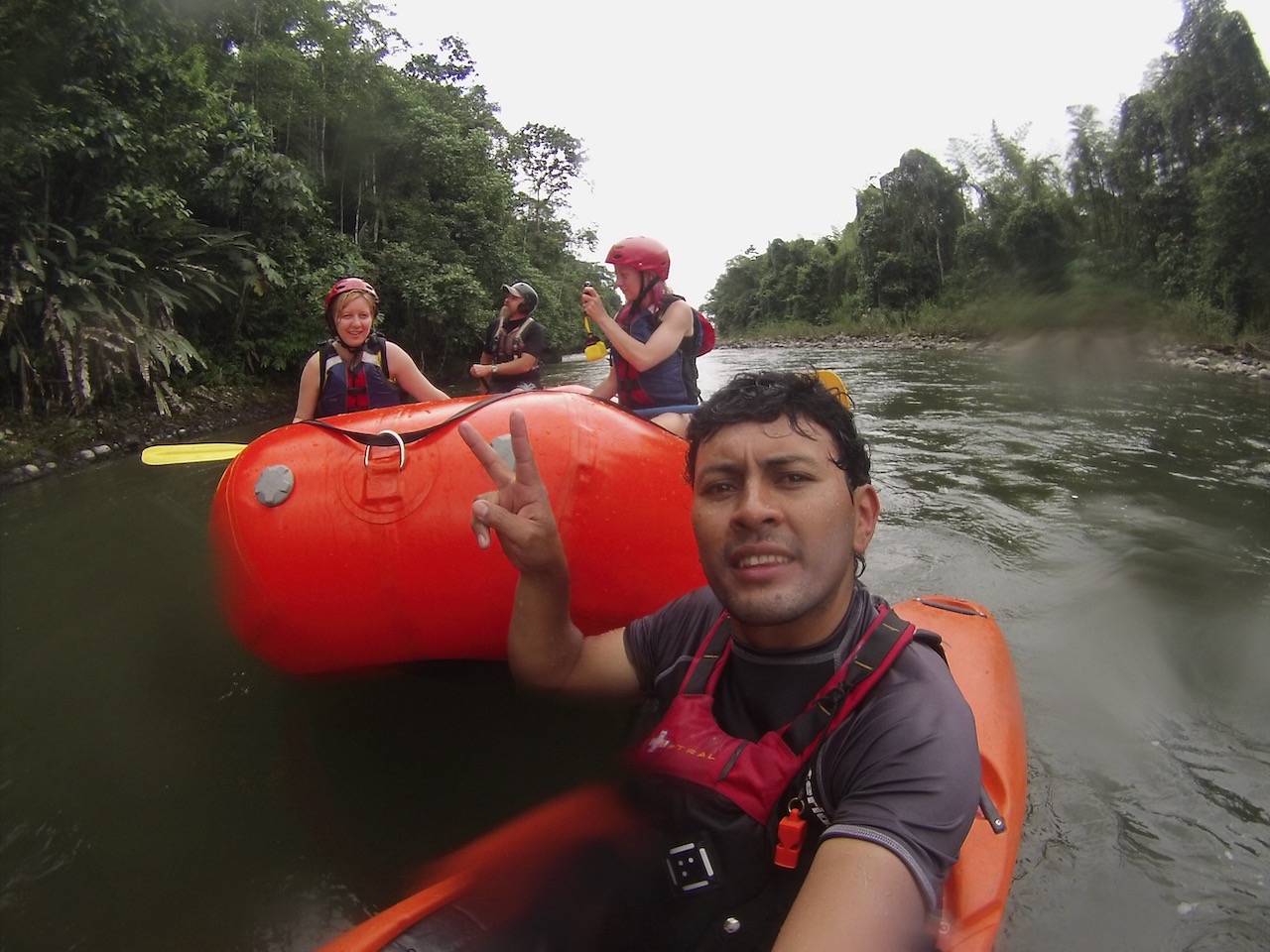
Understanding Ecuador Through Its People
There is something travelers notice almost immediately when they arrive in Ecuador.
It isn’t only the volcanoes, the cloud forests, the Amazon rainforest, the Pacific coast, or the incredible wildlife.
It is the people.
After more than twenty years guiding travelers through Ecuador, I have heard the same observation again and again:
“There is something different about the people here.”
For years, I didn’t know exactly how to answer.
I was born in Quito. Everything around me felt normal: the way families gathered every weekend, the way complete strangers started conversations, the way neighbors still looked after each other, the way a visit to a local market often became more about people than shopping.
Then I became a guide.
I thought I would spend my life introducing Ecuador to travelers.
Instead, travelers slowly introduced Ecuador to me.
Every nationality noticed something I had stopped seeing. Every conversation became another lesson. Little by little, I realized I wasn’t only guiding people through Ecuador. I was rediscovering my own country through their eyes.
Ecuador Is More Than a Country
Ecuador may appear small on a map, but it contains an astonishing variety of worlds.
Most people describe Ecuador through four natural regions: the Andes, the Amazon, the Pacific Coast, and the Galápagos Islands.
As a guide, I have always felt there is another world that deserves its own place: the Cloud Forest.
So for travelers, Ecuador can be understood as five living worlds:
The Andes.
The Cloud Forest.
The Amazon.
The Pacific Coast.
The Galápagos Islands.
Each of these worlds shapes not only landscapes, but also food, language, rhythm, traditions, music, and daily life.
Nature does not simply shape scenery.
It shapes culture.
A Country Built From Many Stories
Understanding Ecuadorians begins by understanding that there has never been one single Ecuadorian identity.
This country has been shaped by thousands of years of Indigenous civilizations, including Kichwa, Shuar, Waorani, Tsáchila, Achuar, Cofán, and many others.
Spanish colonization introduced new languages, architecture, religion, and social traditions.
African communities, especially along the Pacific coast and the Chota Valley, deeply influenced Ecuadorian music, food, agriculture, and cultural identity.
Later immigration from Europe, the Middle East, and Asia added new traditions that also became part of Ecuador’s story.
Modern Ecuador is not the result of one culture.
It is the meeting point of many cultures that continue to evolve together.
Why Ecuadorians Feel Different
Perhaps travelers are not noticing one single characteristic.
Perhaps they are noticing many layers at once.
The resilience of the Andes.
The biodiversity of the cloud forest.
The awareness of the rainforest.
The openness of the coast.
The balance of the islands.
The strength of family.
The richness of Indigenous knowledge.
The warmth of everyday conversations.
These are not qualities you can easily measure.
But you can feel them.
Family, Time, and Community
One of the first things visitors notice is the importance of relationships.
Time in Ecuador often feels different.
It is not always measured only by schedules. It is measured by conversations, shared meals, family gatherings, neighbors helping neighbors, children playing in parks, and long Sunday lunches.
Life here often feels more relational than transactional.
For some travelers, this is surprising.
For others, it becomes one of the things they miss most after returning home.
Why Quito Is the Perfect Place to Begin
People often think Quito is simply where they arrive before traveling somewhere else.
I believe the opposite.
Quito is where Ecuador begins to explain itself.
People from every region of the country meet here: mountain families, coastal flavors, Amazonian cultures, students, artists, scientists, entrepreneurs, and travelers from around the world.
Walk through one neighborhood and you discover centuries of history living beside modern Ecuador.
Visit a local market and you hear stories from every corner of the country.
Sit in a small café and you may leave having learned more about Ecuador than you expected.
That is why understanding Quito is one of the best ways to begin understanding Ecuador itself.
What Travel Has Taught Me
People often thank me for showing them Ecuador.
The truth is that they have also shown Ecuador to me.
Travel works in two directions.
Visitors discover Ecuador.
But Ecuador also teaches us how to see ourselves.
After thousands of conversations, one idea stays with me:
The greatest treasure of Ecuador is not only its volcanoes, rainforests, beaches, or islands.
It is the extraordinary diversity of the people whose lives have been shaped by all of them.
Perhaps that is why Ecuador feels so different.
And perhaps that is why, after all these years, I still feel like I am discovering it for the first time.
