

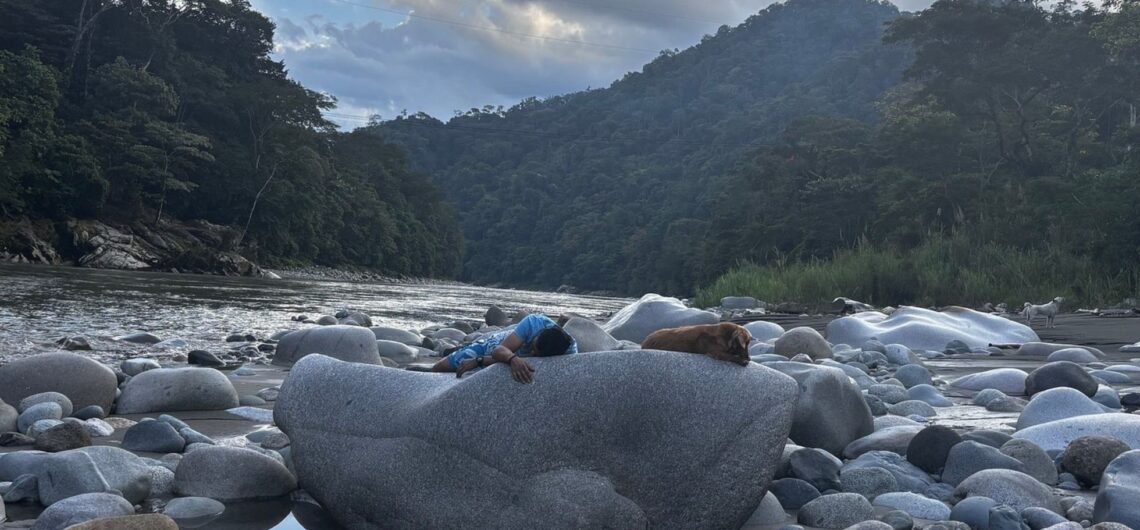
A Barefoot Expeditions Field Guide to Conscious Travel
At Barefoot Expeditions, walking barefoot is not a rule, a challenge, or a statement against shoes.
It is a way of remembering how we move through the world.
For most of human history, feet were not hidden or corrected — they were trusted. They evolved as sensors, not just tools. They read temperature, texture, slope, rhythm. When we allow the foot to touch the ground directly, we receive information instantly, and the body responds with quiet intelligence.
This is where barefoot walking meets conscious travel.
 Presence over speed
Barefoot walking slows you down naturally. You stop stomping. You stop rushing. Each step becomes lighter, shorter, and more intentional. The body aligns over the foot instead of throwing weight forward. Movement becomes quieter. More attentive.
You don’t walk barefoot to go faster.
You walk barefoot to notice more.
Learning through experience
No explanation replaces sensation. When the sole of the foot touches grass, sand, volcanic soil, forest earth, or river stone, the land teaches directly. You learn where the ground is soft, where it is unstable, where it asks for caution. This learning does not come from thinking — it comes from feeling.
This is experiential travel in its most basic form.
Nature as teacher
The ground constantly gives feedback. If you land too hard, it tells you. If you rush, it warns you. If you relax and listen, it guides you. Barefoot walking teaches balance, patience, and humility — not through theory, but through contact.
Nature doesn’t ask you to dominate it.
It asks you to pay attention.
Simplicity, awareness, responsibility
Barefoot Expeditions does not promote walking barefoot everywhere, all the time. Conscious travel includes discernment. There are moments to connect directly, and moments to protect yourself. Shoes are not the enemy. Disconnection is.
A few mindful minutes barefoot are enough. On grass. On sand. On soil. On a safe trail. It is not about endurance or toughness — it is about awareness.
How to walk barefoot, consciously
-
Start slowly. Short periods allow the feet and nervous system to adapt.
-
Soften your steps. Avoid heavy heel strikes. Let the foot land gently, often midfoot, with the heel following naturally.
-
Shorten your stride. Keep your steps under your center of mass. Movement becomes lighter and more stable.
-
Let your toes spread. They are meant to stabilize, not squeeze. Push off gently through the big toe.
-
Listen to sensation, not pain. Sensitivity is normal. Sharp pain is not. Awareness includes stopping.
-
Read the terrain. Look ahead. Feel the ground. Adjust your rhythm.
-
Know when to wear shoes. Responsibility is part of respect.
Cultural memory and respect
For many cultures, walking barefoot was never a philosophy or a trend. It was simply normal. Recognizing this is not about imitation, but about humility — understanding that modern comfort has distanced us from natural feedback, not improved it.
Barefoot as a metaphor for travel
Barefoot walking reflects how we travel. Lighter. Slower. More attentive. Less armored. More present. It reminds us that meaningful journeys are not about conquering landscapes, but learning how to belong to them — even briefly.
At Barefoot Expeditions, we believe that sometimes the most powerful way to connect with a place is by removing something — speed, noise, excess — rather than adding more.
Sometimes, the journey begins by taking off your shoes.
