

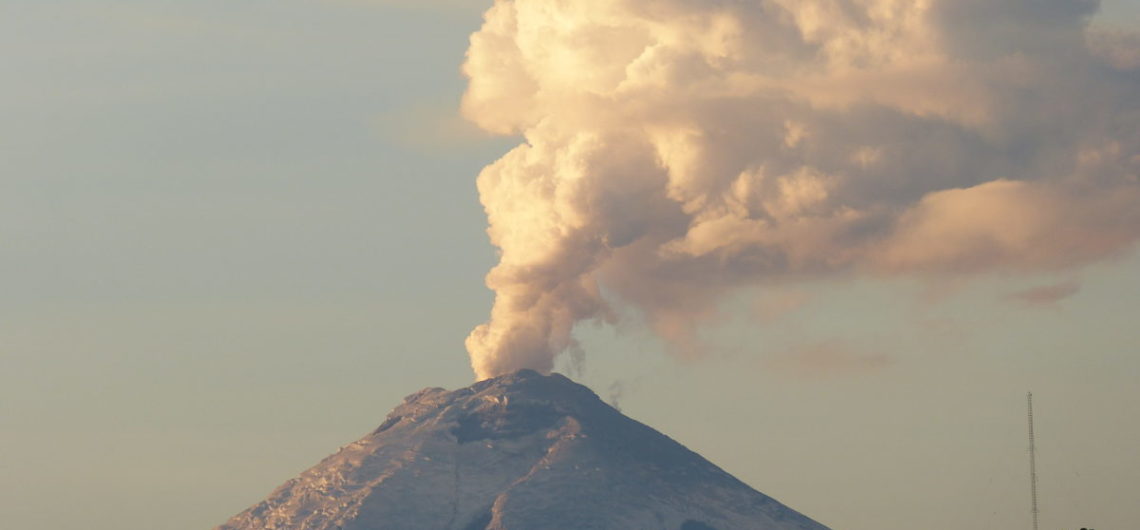
Barefoot Science · Cotopaxi · Volcano History
Cotopaxi Eruptions Timeline
The volcanic history of Ecuador’s most iconic volcano.
Cotopaxi is more than one of Ecuador’s most beautiful mountains.
It is an active, glacier-clad stratovolcano and one of the country’s most closely monitored volcanoes: a high Andean giant whose eruptions have shaped landscapes, communities, agriculture, water systems, and risk awareness across the central Andes.
For travelers, Cotopaxi is extraordinary beauty. For Ecuador, it is also a living volcano.
Rising above Cotopaxi National Park, this almost symmetrical mountain is one of the great symbols of Ecuador: open páramo, wild horses, high-altitude lakes, sweeping volcanic views, and one of the most recognizable silhouettes in South America.
Understanding its eruptive history adds depth to any visit. It reminds us that the Andes are not static scenery. They are active, powerful landscapes where geology, weather, glaciers, water, history, and human settlement are all connected.
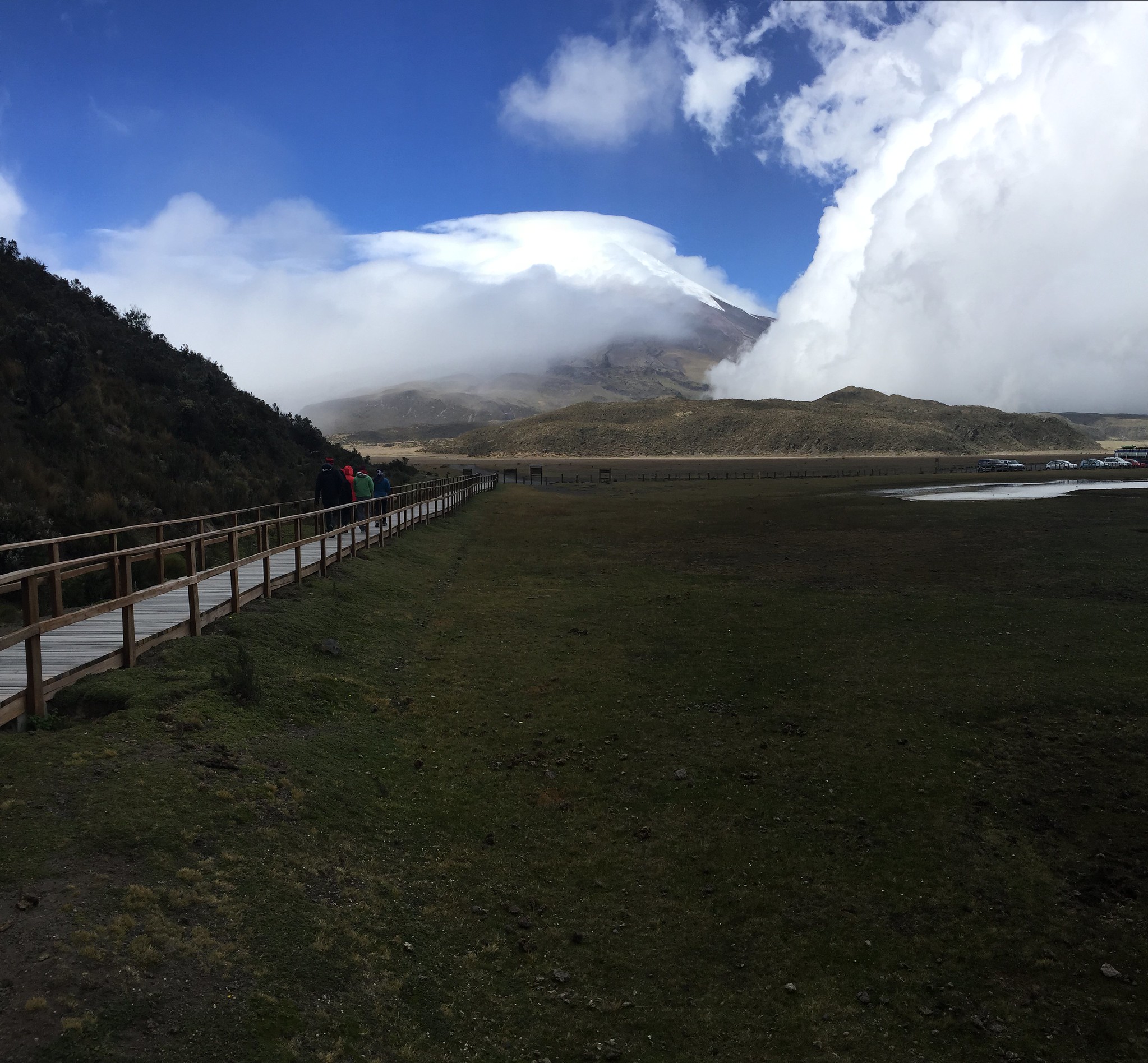
Geology
A stratovolcano shaped by eruptions, lava, ash, glaciers, and lahars.
Landscape
Páramo, highland lakes, volcanic soil, wild horses, and open Andean skies.
Risk Awareness
A mountain that teaches respect, preparation, observation, and humility.
Travel Depth
A visit becomes richer when beauty is connected with science and history.
Cotopaxi is not only a view. It is Ecuador’s volcanic memory written into the land.
Why Cotopaxi Matters
Cotopaxi is considered one of Ecuador’s most hazardous volcanoes because of its eruptive style, glacier cover, steep relief, and the number of people and communities potentially exposed to volcanic hazards. One of the main concerns during major eruptions is the formation of lahars — fast-moving volcanic mudflows that can travel down river valleys when volcanic activity melts snow and ice.
That does not mean Cotopaxi should be seen only as a danger. It means it should be approached with respect, preparation, and good information.
For visitors, Cotopaxi can be experienced safely through well-planned trips that consider weather, altitude, current volcanic conditions, park regulations, and official monitoring updates.
Main Historical Eruptive Periods of Cotopaxi
According to Ecuador’s Instituto Geofísico, Cotopaxi has had five major historical eruptive periods since the beginning of the Spanish colonial period: 1532–1534, 1742–1744, 1766–1768, 1853–1854, and 1877–1880.
1532–1534: Early Historical Activity
One of Cotopaxi’s earliest documented historical eruptive periods took place between 1532 and 1534, during a time of major transformation in the Andes.
This period is especially significant because it connects volcanic history with one of the most dramatic chapters in Ecuadorian and Andean history: the final years of the Inca Empire and the arrival of the Spanish.
The eruption reminds us that Cotopaxi’s story is not only geological. It is also historical.
1742–1744: A New Cycle of Activity
After a long period of relative quiet, Cotopaxi entered another eruptive cycle between 1742 and 1744.
This period marked the return of significant volcanic activity and became part of the early written record of Cotopaxi’s behavior. Ashfall, explosions, and volcanic deposits from this time helped shape scientific understanding of the volcano’s recurring eruptive patterns.
1766–1768: A Destructive Eruptive Period
The 1766–1768 eruptive period was one of the most important in Cotopaxi’s historical record.
This cycle included powerful volcanic activity that affected surrounding valleys, agriculture, settlements, and routes across the central Andes. Lahars and ashfall were among the most serious hazards associated with Cotopaxi during major eruptions.
For travelers standing in Cotopaxi National Park today, it is easy to admire the mountain’s beauty. But this history reveals the deeper force behind the landscape.
1853–1854: Cotopaxi Remains Active
Cotopaxi erupted again during the 1853–1854 period.
This activity confirmed that Cotopaxi was not an isolated historical threat, but an active volcano with repeated eruptive cycles over time.
For scientists and local communities, each eruptive period added to the understanding of how the volcano behaves and which areas may be affected during future activity.
1877–1880: One of Cotopaxi’s Most Famous Eruptions
The 1877 eruption is one of the most famous and destructive events in Cotopaxi’s history.
This eruption generated major lahars that traveled through river systems and affected communities far from the volcano itself. Because Cotopaxi is covered by glaciers, large eruptions can melt ice and snow, creating powerful flows that move rapidly through valleys.
The 1877–1880 period remains central to how Ecuador understands Cotopaxi’s volcanic risk today.
2015–2016: Cotopaxi Awakens Again
After decades of relative calm, Cotopaxi showed renewed eruptive activity in 2015.
Ash emissions and volcanic unrest caused concern across Ecuador, affected air travel, and reminded nearby communities of the volcano’s active nature.
For travelers, this period was also a reminder that Cotopaxi is not just a scenic national park. It is part of a monitored volcanic system.
2022–2023: Recent Activity and Modern Monitoring
Cotopaxi began a new eruptive period on October 21, 2022. According to Ecuador’s Instituto Geofísico, this activity lasted for more than nine months and was mainly characterized by emissions of ash, water vapor, and volcanic gases. The most intense phase occurred between December 2022 and February 2023, with frequent low-altitude ash emissions.
This recent activity is important for modern travelers because Cotopaxi is now one of the best monitored volcanoes in Ecuador. Monitoring includes seismic activity, gas emissions, deformation, visual observation, and official updates from scientific authorities.
Good expedition planning should always consider current volcanic conditions.
Can You Visit Cotopaxi Safely?
Yes. Cotopaxi National Park remains one of Ecuador’s most important and rewarding travel destinations. Visitors can explore the park through day trips, hiking, photography routes, high-altitude acclimatization walks, and, when conditions allow, guided climbing programs.
However, Cotopaxi should always be approached with respect.
A responsible visit should consider:
Current volcanic activity reports
Weather and altitude conditions
Official park access rules
Road and trail conditions
Physical preparation
Proper guiding and safety protocols
For summit attempts, travelers should also consider acclimatization, glacier conditions, technical equipment, and professional mountain guides.
Cotopaxi as a Travel Experience
Cotopaxi is not only a volcano to look at. It is a landscape to understand.
A well-designed Cotopaxi journey can include:
Cotopaxi National Park
Limpiopungo Lagoon
Páramo landscapes and wildlife
Hacienda stays near the volcano
Acclimatization hikes
Volcano photography
Quilotoa or other Andean extensions
Optional summit preparation with certified guides
The real value of Cotopaxi is not only reaching a viewpoint or attempting the summit. It is understanding the mountain as part of Ecuador’s living Andes — powerful, beautiful, active, and deeply connected to the people who live around it.
Explore Cotopaxi With Context and Proper Preparation
Cotopaxi’s eruptive history makes the mountain more impressive, not less.
It shows why this volcano deserves respect, why local knowledge matters, and why a journey here should be planned with care. Whether you want a scenic visit to Cotopaxi National Park, a highland photography journey, an acclimatization route, or a serious mountain experience, Barefoot Expeditions can help you design the right approach.
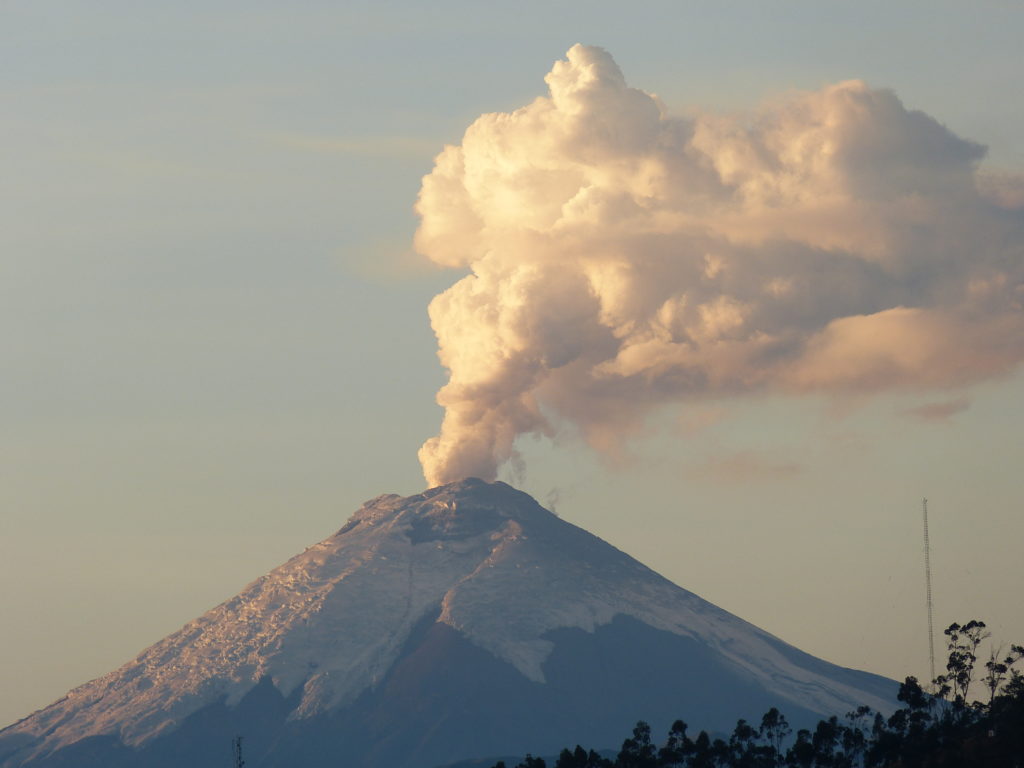
A Science-Based Way to Understand Cotopaxi
For travelers interested in geology, volcanology, and the science behind Ecuador’s active landscapes, a Cotopaxi journey can go beyond the national park itself.
Depending on timing, availability, and coordination, Barefoot Expeditions may be able to include a special educational visit or expert-led context related to Ecuador’s volcanic monitoring work. This can help travelers understand how Cotopaxi is studied today — from seismic activity and gas emissions to ash monitoring, glaciers, lahars, and community risk awareness.
This kind of experience is not a standard tour stop. It is a custom addition for travelers who want to understand the Andes through science, local knowledge, and real-world context.
