

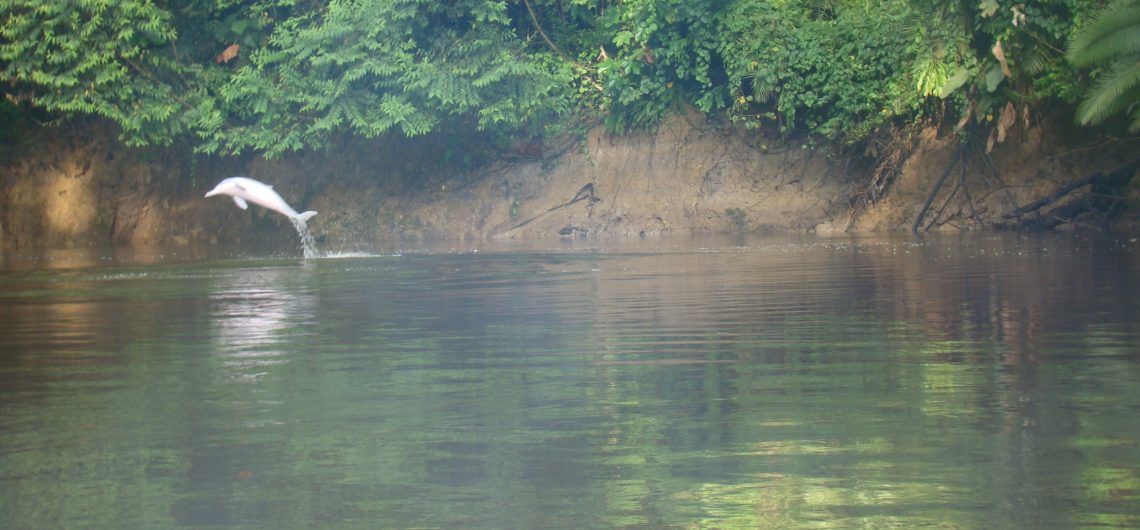
Where to See Pink Dolphins in Ecuador
Pink dolphins inhabit particular river systems in the Ecuadorian Amazon. The best destination depends on the season, river conditions, travel style, and how remote you want the experience to be.
A strong choice for lagoon and river exploration, combining wildlife, canoe journeys, and accessible multi-day Amazon programs.
A more remote and biologically rich region for travelers seeking deeper rainforest immersion and complex river habitats.
A major Amazon river corridor connecting lodges, communities, lagoons, and protected habitats where dolphin encounters may occur.
Seeing pink dolphins in Ecuador isn’t just about being in the Amazon — it’s about being in the right place, at the right time, with the right conditions.
Water levels in the rainforest change throughout the year, and this directly affects where dolphins can be found. During the dry season, they tend to stay in main river channels, making sightings more frequent and easier to anticipate. In the rainy season, they move deeper into flooded forests, creating a more immersive — but less predictable — experience.
That’s why choosing the right lodge, river system, and timing makes a real difference.
A well-designed Amazon journey doesn’t just take you into the rainforest — it positions you in the best areas for wildlife encounters, guided by people who understand how these ecosystems change day by day.
Tip: Travelers who plan their Amazon trip around water levels and location typically have a much higher chance of seeing pink dolphins in the wild.
Amazon river dolphins are the most widespread river dolphins in the world, found across six countries in South America — but Ecuador offers some of the most accessible and rewarding places to encounter them in the wild.
Best time to see pink dolphins in Ecuador
Pink dolphins can be seen year-round in the Ecuadorian Amazon, but your chances of encountering them depend heavily on water levels and river conditions.
During the dry season (July to November), rivers are lower and more concentrated. This naturally brings dolphins into main channels, making sightings more frequent and easier to anticipate.
In the rainy season (December to June), rising water levels allow dolphins to move into flooded forests and smaller tributaries. Encounters are still possible, but they become less predictable — and more about immersion than frequency.
Better visibility
More consistent sightings
Easier river navigation
More immersive rainforest
Dolphins spread out
Less predictable encounters
Pink dolphins move throughout a wide network of rivers, lagoons, and flooded forests. As water levels rise and fall, their behavior changes — shifting between main river channels and smaller, more hidden areas of the rainforest.
What matters most: It’s not just the season — it’s where you are within the river system. The right location and timing can make a significant difference in your chances of seeing pink dolphins.
The Amazon river dolphin is located in most of the area’s aquatic habitats, including river basins, significant courses of rivers, canals, river tributaries, lakes, and at the ends of rapids and waterfalls. Cyclical changes in the water levels of rivers take place throughout the year. During the dry season, dolphins occupy the main river channels, and during the rainy season, they can move easily to smaller tributaries, forests, and floodplains.
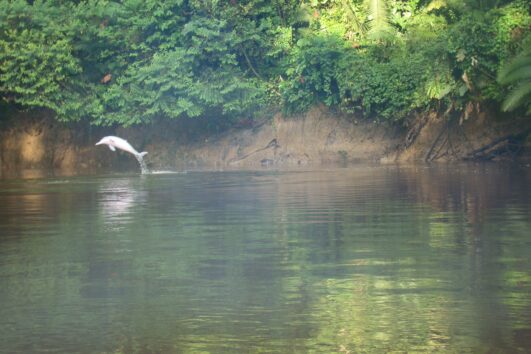
Yasuni Pink Dolphin Expedition
This 5-day Amazon expedition invites you into the Napo and Yasuní region through river landscapes, rainforest trails, Kichwa cultural context, nocturnal wildlife, and the possibility of observing pink river dolphins in their natural habitat.
Here are some specific details about the pink dolphins that can be seen in the Lower Napo River:
- Pink dolphins are actually gray when they are born, but they turn pink as they mature.
- They are the largest species of river dolphin and can grow up to 6 feet long.
- They are an endangered species, and there are only an estimated 1,500 left in the wild.
- Pink dolphins are very social animals, and they often swim in groups of up to 10 individuals.
- They are also very playful and have been known to leap out of the water and twirl around.
Is seeing pink dolphins in Ecuador right for you?
Seeing pink dolphins in the wild is an extraordinary experience — but it’s important to understand what it really involves.
✔ This experience is ideal for you if:
- You’re passionate about wildlife and nature
- You enjoy remote, off-the-beaten-path destinations
- You value authentic experiences over luxury tourism
- You understand that wildlife sightings are not guaranteed
✖ This may not be the right fit if:
- You expect guaranteed sightings like in a zoo
- You prefer highly structured or luxury resort-style trips
- You’re not comfortable in humid, remote environments
Plan the right Amazon journey
Ready to look for pink dolphins in the wild?
Pink dolphin sightings depend on water levels, season, location, timing, and natural wildlife movement. We help travelers compare Yasuní, Cuyabeno, and the Napo region before choosing the route that best matches their interests, available time, comfort level, and budget.
Send us your travel dates, number of travelers, preferred comfort level, and the wildlife experiences that matter most to you. We will help you choose the most logical Amazon route without forcing the wrong trip.
