

Ecuador History · Andes · Barefoot Field Story
Atahualpa: The Last Sovereign Inca Ruler
In 1532, one of the most powerful rulers in the Americas entered a meeting that would change the Andes forever.
Within hours, Atahualpa was captured. Within months, the world he ruled began to fracture under the force of conquest.
This is the story of Atahualpa, the Inca ruler whose fall still echoes across the mountains of Ecuador today.
His story is not only about conquest. It is about power, resistance, memory, and the transformation of the Andes: a turning point that still shapes how Ecuador understands its land, its history, and its identity.
In the early 16th century, the Inca Empire stretched along the spine of South America, from present-day Colombia to Chile. It was the largest and most powerful empire in the Americas.
At the center of this vast world stood a young ruler whose fate would become one of the most dramatic stories in Andean history.
His name was Atahualpa.
Born around 1502, Atahualpa was a son of the Inca emperor Huayna Capac and was deeply connected to the northern Andes, especially the region of Quito in present-day Ecuador.
That northern connection shaped his early life and later influenced the struggle for power that divided the empire.
By the time Atahualpa rose to power, the Inca world was already beginning to fracture.
The Civil War of the Inca Empire
When Huayna Cápac died around 1527, the empire was left without a clear successor. Two brothers emerged as rivals:
-
Huáscar, who controlled Cusco, the traditional capital of the Inca Empire
-
Atahualpa, who held strong support in the northern territories around Quito
What followed was a brutal civil war that stretched across the Andes.
Atahualpa’s forces, composed of experienced northern generals and warriors, eventually defeated Huáscar. After years of conflict, Atahualpa emerged victorious and became the undisputed ruler of the Inca Empire.
But this victory came at a terrible moment.
As the empire recovered from civil war, a small and unknown group of foreigners was moving through the Andes.
The Arrival of the Spanish
In 1532, the Spanish conquistador Francisco Pizarro arrived in the Andes with fewer than two hundred soldiers.
Compared to the vast armies of the Inca Empire, their force was insignificant. Yet they possessed two things the Inca had never encountered:
-
horses
-
steel weapons and firearms
More importantly, they used deception and surprise.
Atahualpa agreed to meet Pizarro in the city of Cajamarca in November 1532. The Inca ruler arrived with thousands of attendants but very few armed soldiers, believing the meeting to be a diplomatic encounter.
Instead, it became one of the most shocking ambushes in world history.
The Capture of Atahualpa
As Atahualpa entered the square of Cajamarca, Spanish soldiers hidden around the plaza suddenly attacked.
Within minutes, the Spanish forces overwhelmed the unarmed Inca attendants. In the chaos and confusion, Atahualpa was captured.
The emperor of the largest empire in the Americas had fallen into the hands of fewer than two hundred men.
The capture of Atahualpa effectively paralyzed the Inca political system. Without the emperor, the empire could not function normally.
But Atahualpa still believed he could negotiate his freedom.
The Famous Ransom of Gold
While imprisoned, Atahualpa offered the Spanish an extraordinary deal.
He promised to fill a large room with gold and two additional rooms with silver in exchange for his release.
Messengers traveled across the empire gathering treasures from temples, palaces, and sacred sites. Artifacts of immense cultural and artistic value were melted down into bars for the ransom.
Historians believe the treasure delivered to the Spanish was one of the largest ransoms ever paid in history.
Yet despite receiving the wealth they demanded, the Spanish never intended to free him.
The Trial and Execution
In July 1533, Atahualpa was placed on trial by a Spanish court.
The accusations included:
-
treason
-
idolatry
-
conspiracy against the Spanish crown
These charges had little legitimacy, but they provided a justification for the decision already made.
Atahualpa was sentenced to death.
According to historical accounts, he was executed on July 26, 1533, by garrote, a method of execution that involved strangulation with a metal collar.
With his death, the political structure of the Inca Empire collapsed.
The Mystery of Atahualpa’s Burial
After his execution, Atahualpa’s body was reportedly buried in Cajamarca.
However, the story does not end there.
According to several historical accounts and Andean oral traditions, loyal followers secretly removed his remains and reburied them in an unknown location.
To this day, the true burial place of Atahualpa remains a mystery.
Various legends suggest that his body may have been hidden somewhere in the Andes, possibly in remote regions connected to the northern Inca territories.
Related Story
Atahualpa’s Lost Resting Place? The Mystery of Malqui-Machay near Quilotoa
One of Ecuador’s most fascinating historical questions may lead beyond Cajamarca and Quito, into the mountains of Cotopaxi. Explore the Malqui-Machay hypothesis and the hidden history of the Sigchos–Quilotoa region.
Read the Malqui-Machay StoryLegends of Escape
Among the many stories surrounding Atahualpa, one persistent legend claims that he may have escaped his captors.
According to this theory, his followers disguised him as a commoner and helped him flee into the mountains after the Spanish believed him dead.
There is no historical evidence supporting this story, but it reflects something deeper in Andean culture: the enduring belief that the Inca spirit never truly disappeared.
Even today, these legends remain part of the cultural memory of the Andes.
The End of an Empire
The death of Atahualpa marked a turning point in the history of South America.
Without its emperor, the Inca Empire rapidly disintegrated. Spanish forces soon occupied Cusco and established colonial rule across the Andes.
Within only a few years, one of the most sophisticated civilizations in the Americas had fallen.
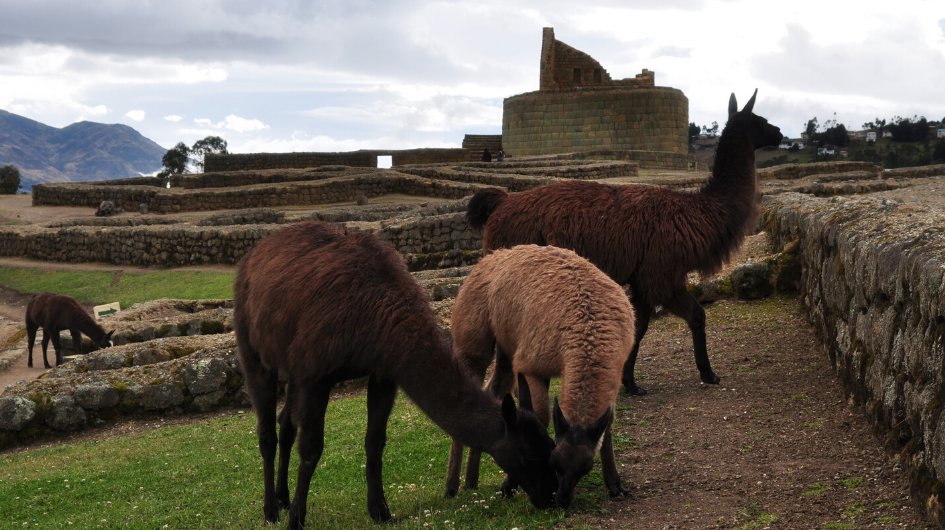
Yet the legacy of the Inca world remains visible across the Andean landscape — in ancient trails, agricultural terraces, stone architecture, and cultural traditions that continue to shape life in the mountains today.
Exploring the Andes Today
The landscapes where the Inca civilization once flourished can still be experienced throughout the Andean region.
In Ecuador, the highlands surrounding Quito, Cotopaxi, and Quilotoa reveal dramatic volcanic scenery and ancient routes that echo the movements of past civilizations.
Traveling through these mountains offers a powerful perspective on the geography that shaped the history of the Inca Empire.
